

Skip to content

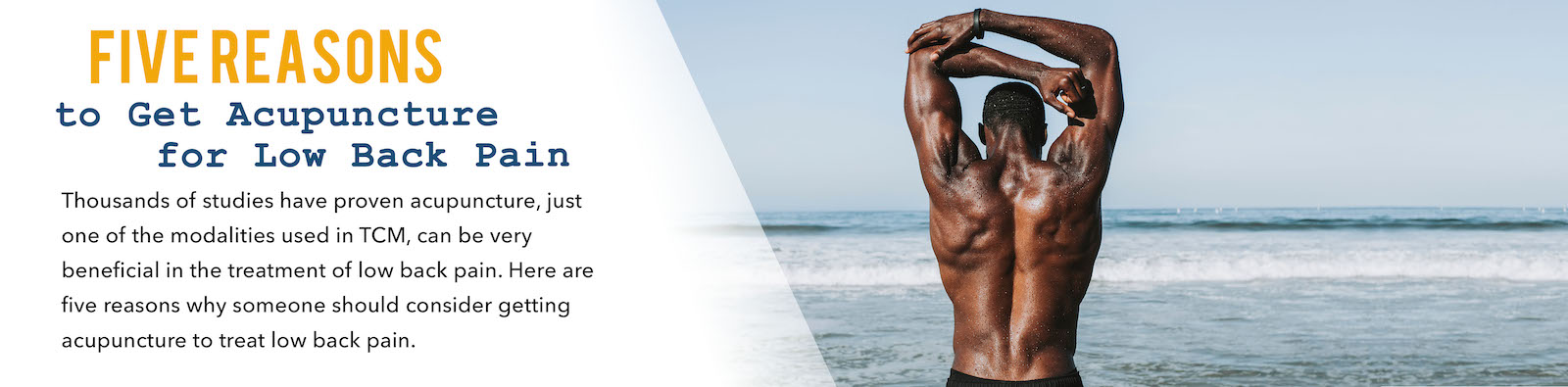
Five Reasons to Get Acupuncture for Low Back Pain

Statistics show eight out of 10 people will experience low back pain at some point during their life. Seeking medical treatment for back pain is very common. Typically back pain is fleeting and can be easily resolved with rest, heat and an occasional anti-inflammatory like ibuprofen. However, once the damage is done, the recurrence of back pain can be as high as 50 percent. Part of this is because as we age, things like muscles and tendons become less flexible and pliable. It is also very well known in the United States, people are too sedentary and this leads to excess weight gain that can create added pressure on the body, especially the low back. continue reading »

Posted in Uncategorized | Comments Off on Five Reasons to Get Acupuncture for Low Back Pain

Use these Acupressure Points for Sciatic Pain

Sciatica is the pain caused by pressure or irritation of the sciatic nerve, which runs from the lower back to the sole of the foot. The irritation can lead to pain anywhere along the sciatic nerve, and it can also create a lack of muscle power to the legs and cause sensations in the legs, buttocks and low back to change. Current statistics show that up to 10 percent of the population between the ages of 25 to 45 are dealing with or have experienced sciatic pain.

The sciatic nerve is the largest nerve in the body. It consists of a large bundle of smaller nerves that begin in the low back region of the spine, travel down the buttocks and move through the leg. Symptoms of sciatica include radiating pain, numbness and tingling. Irritation of the sciatic nerve can be caused by muscle spasms, spinal disc compression or slipped spinal discs.

In traditional Chinese medical theory, blood stagnation is the most common cause of sciatica. Blood stagnation can affect the soft tissue of the lumbar spine, hips and pelvis. This is what causes the muscles to spasm, then creating extra tension that triggers the shooting pain associated with sciatica.

Traditional Chinese medicine suggests several treatment modalities for managing sciatica.


Acupuncture for Sciatica: Many studies have shown acupuncture is more effective at relieving the pain, numbness and tingling associated with sciatica than modern medicinal treatments. Acupuncture treatments can help to reprogram the muscles to stay in a relaxed position. Acupuncture treatments can also help treat sciatica by releasing natural painkillers like endorphins and enkephalins from the brain and neurologic system.


Acupuncture Points for Sciatica:

Urinary Bladder 23: This point is located on the lower back, halfway between the lowest ribs and the hip bone and on either side of the muscle group that runs right up the spine. This point reduces muscle tension and provides relief from low-back pain.


Urinary Bladder 40: Ths point is located directly in the middle of the crease at the back of each knee. This point treats all the major pain sensations felt along the spine. It also helps to control muscle spasms, knee stiffness, arthritis, leg pain and it helps to dissipate excess heat trapped in the body.


Urinary Bladder 62: This point is located just below the ankle bone on the outer side of each ankle. This point is great for relieving lumbar spine tension as well as anxiety.


Dietary and Lifestyle Recommendations for Sciatica: Adding potassium to your diet can help you heal from sciatica. Bananas, oranges, potatoes and spirulina are all good sources of potassium. Dark, leafy vegetables and legumes, such as black beans, kidney beans and soybeans are also beneficial when dealing with sciatica. Avoid foods that create dampness in the body, such as spicy, greasy or fried foods and dairy.

Incorporating daily exercise and stretching into your life can also help. The low back and lumbar spine may become weak if they are neglected, so sitting for long periods of time without getting up can be very detrimental. This also has a way of weakening the muscles of the lumbar area, which then can lead to slipped discs. Stretching and moving throughout the day, even after the pain has subsided, is vital to a healthy back.

Are you suffering from pain, high level of stress, or just physical or mental tension?

Or wellness center offers acupuncture, cupping, herbal medicine, acupressure massage, and other forms of Traditional Chinese medicine for the treatment of pain and other physical and mental/emotional symptoms.

We accept health insurance (if they cover acupuncture) and offer affordable care plans. We also have  payment plans available to those in financial need. For more information or to schedule  an appointment call us at 630-837-4241 or schedule online 

Posted in Uncategorized | Comments Off on Use these Acupressure Points for Sciatic Pain

Research Update: Acupuncture Beats Intravenous Morphine for Acute Pain Relief

In 2016, the American Journal of Emergency Medicine published a study that looking at the efficacy of acupuncture in managing acute pain for patients in the emergency room when compared to intravenous morphine. The researchers looked at 300 patients who presented to the emergency room with acute onset moderate to severe pain. Half of them were treated with acupuncture and half were given intravenous morphine. To measure their pain reduction, they asked patients to report their pain score before and after the treatments, and considered a reduction of 50 percent or greater to be a significant reduction.

The study showed the patients who received acupuncture treatments for their pain saw pain reductions of 92 percent compared to 78 percent in the morphine group. The acupuncture also seemed to work more quickly than the morphine, lowering patients’ pain scores in an average of 16 minutes compared to 28 minutes for the morphine group. Additionally, 89 patients who received morphine experienced minor adverse side effects while only four of the patients who received acupuncture did. Overall, this study showed acupuncture worked better and more quickly than intravenous morphine for reducing people’s pain in a medical setting.

This study joins a growing body of literature suggesting acupuncture is very effective at reducing pain and/or changing how our bodies experience pain. The lack of adverse side effects associated with acupuncture treatments presents a strong argument for its use, especially as synthetic medications are associated with many negative side effects and people are often allergic to the medications.

Because acupuncture affects our brains, stimulating the release of natural pain-reducing hormones, it can be used for any number of afflictions that cause pain. Acupuncture stimulates the release of endorphins – neurotransmitters responsible for blocking the sensation of pain. The stimulation also releases other chemicals that either change how the body experiences pain or triggers the release of other chemicals that activate the body’s internal regulating system. It is thought that acupoints are more densely packed with nerves than other points on the body, so stimulating these points sends more signals along the nerve networks in our body to cause this release of chemicals.

This process has a normalizing effect on nerves and hormones. By bringing the body into better biochemical balance, acupuncture promotes physical and emotional well-being and supports the body’s natural healing abilities.

Acupuncture and TCM also address the root causes of pain rather than just masking the symptoms. We develop treatment plans that are unique to each patient because each patient comes in with a unique body, health history and root cause behind their pain. By addressing the root causes, we create more lasting healing and bring your body back to a place where it can function optimally, using its natural healing processes to help you stay well.


https://www.ajemjournal.com/article/S0735-6757(16)30422-3/abstract

Posted in Uncategorized | Comments Off on Research Update: Acupuncture Beats Intravenous Morphine for Acute Pain Relief

Research Update: Acupuncture Relieves PTSD Symptoms After Natural Disaster

In April 2019, a team of Italian researchers published a study in Medical Acupuncture that suggests acupuncture may be effective for reducing symptoms associated with post-traumatic stress disorder (PTSD) after a natural disaster. The research team looked at residents of Amatrice, Italy, were a 6.0-magnitude earthquake in 2016 left nearly 300 people dead and almost 30,000 homeless. Natural hazards, like earthquakes, that are unpredictable and wreak widespread havoc on communities, have been shown to cause psychiatric disorders in survivors, including PTSD.

The participants in this study received five weeks of acupuncture treatments starting about a month after the earthquake. Researchers used patient-reported numbers on a pain scale to evaluate the effectiveness of the treatments. Before the treatments, 68 percent of the patients reported having psychological and pain symptoms associated with PTSD. Already after the third treatment, 54 percent of patients reported improvements in their psychological symptoms and 60 percent reported improvements in their pain symptoms. Using a statistical analysis, researchers measured a significant reduction between the initial reported psychological and pain scores and the scores after the third treatment. The researchers did not report any adverse side effects or events.

In the aftermath of natural disasters, communities are thrown into stress-provoking situations for myriad reasons, including loss of life, loss of property, loss of job, other economic losses, loss of community in the case some members move away and loss of infrastructure like schools or restaurants, among other things. Studies show individual mental health plays an important role in the success of communities rebuilding efforts after a natural disaster.

Although more research is needed to bolster the findings of this study, it suggests acupuncture can be an effective therapy for communities in the aftermath of a natural disaster. Studies show acupuncture is effective at balancing hormone levels that contribute to moderating stress levels in the body. The most significant body of research on acupuncture is in the field of acupuncture’s ability to reduce physical pain. This study suggests the effects of acupuncture extend to stress and pain brought on by a natural disaster.


https://www.eurekalert.org/pub_releases/2019-04/maliaed042319.php


Posted in Uncategorized | Comments Off on Research Update: Acupuncture Relieves PTSD Symptoms After Natural Disaster

The Yin and Yang of Back Pain

In Chinese medical theory, the most basic distinction between types of pain is whether they are due to ‘deficiency’ or ‘stagnation,’ both at the site of pain and systemically.

In this article, we’ll look at what deficiency pain means.


Deficiency Pain

 Deficiency refers to a lack of one or both of Qi and blood. Each of these can be deficient in a couple of ways themselves.


Qi deficiency.

A deficiency of Qi can be expressed as the inability of a muscle to fully contract and then relax, or as a functional pattern of imbalance due to neurological habituation.            

Neurological habituation causes a communication line between some part of the body and the brain to become weak. In this case, Qi can be seen as the impetus of nerve signaling and the ability of the tissue to communicate with its environment.

For example, when sitting at a desk, our bodies don’t generally demand the gluteus muscles to activate (we are just using them as cushions), so after a period of time our brains tend to ignore those muscles in favor of more actively used body parts such as the low back, hands and eyes. Over days, weeks and years of this pattern of inactivity, the neurological connection between our brain and our glutes becomes less robust, and it becomes more difficult to ‘fire’ those muscles when we really do need them, like when running.

This sets up a pattern of a different muscle activating (say, muscles of the low back) to try to perform functions which another muscle is best suited for (say, the glutes). This then leads to the overuse of the low back, but this overuse is actually due to a deficiency in another location. So pain might manifest in the low back or in the glutes (as a referral of pain from the tense low back), all because the original neurological signaling network has been compromised.   

Another type of Qi deficiency, the type disallowing the muscle to truly contract and then relax, is tied into general deficiency of the body tissues. This type of deficiency manifests as people age and the muscles become more tense by default, losing the full responsiveness, flexibility and easy range of motion that we experience as children.


Blood deficiency

Blood deficiency can be due to multiple factors as well, but the two main ideas are either lack of blood flow to the site of pain, or lack of proper oxygenation and nutrition within the blood to power the full potential of the tissues.

An inability of the blood to perfuse the site of pain is compounded by many factors. Some tissues naturally receive more blood than others. For example, skin and muscle tissue have many capillaries providing blood to the tissue, while tendons, ligaments, all kinds of connective tissue and bone often have very little access to fresh blood.

The Chinese medical theory of blood deficiency includes the inability to move the blood to the correct sites at the correct times, and a lack of energy to allow the blood to reach all of the tissues in an optimal way. This impacts the rate of recovery from daily stresses on the tissues. Over time, as these stresses do not repair, they initiate dysfunction and inflammation, which may irritate or impinge nearby nerves.

Once the blood flow has been compromised and pain sets in, the ability of the area to recover blood flow is directly related to how quickly the pain will dissipate and how long it will take to recover completely. The less blood flow, generally the longer the recovery time.

Deficiencies of the content of the blood are related to the function of the organ systems as well as dietary habit. Most famously, magnesium deficiency can cause muscle cramps, so athletes are often advised to eat things like bananas and avocados, fruits high in magnesium.

However, there are many nutrients necessary for optimal function of the musculoskeletal system. According to Chinese medical theory, the ability of the blood to deliver collagen-building material to the connective tissues is just as important as the ability of the blood to deliver magnesium to muscles. Both can lead to major pain if not carried out.


Posted in Uncategorized | Comments Off on The Yin and Yang of Back Pain
(630) 837-4241 Directions Contact/Schedule