


- One Community
Acupuncture Center342 S Main St.
Unit 1 Lower Level
Bartlett, Illinois 60103(630) 837-4241 Follow Us!


- Sign up to receive news and updates and get my free report:“The Top 10 Reasons to Try Acupuncture”


Uncategorized
Why Your Headaches, Neck Tension, Irritability, and Poor Sleep May Not Be Separate Problems
By Carlos Carpintero, L.Ac. | In-Power Wellness Center
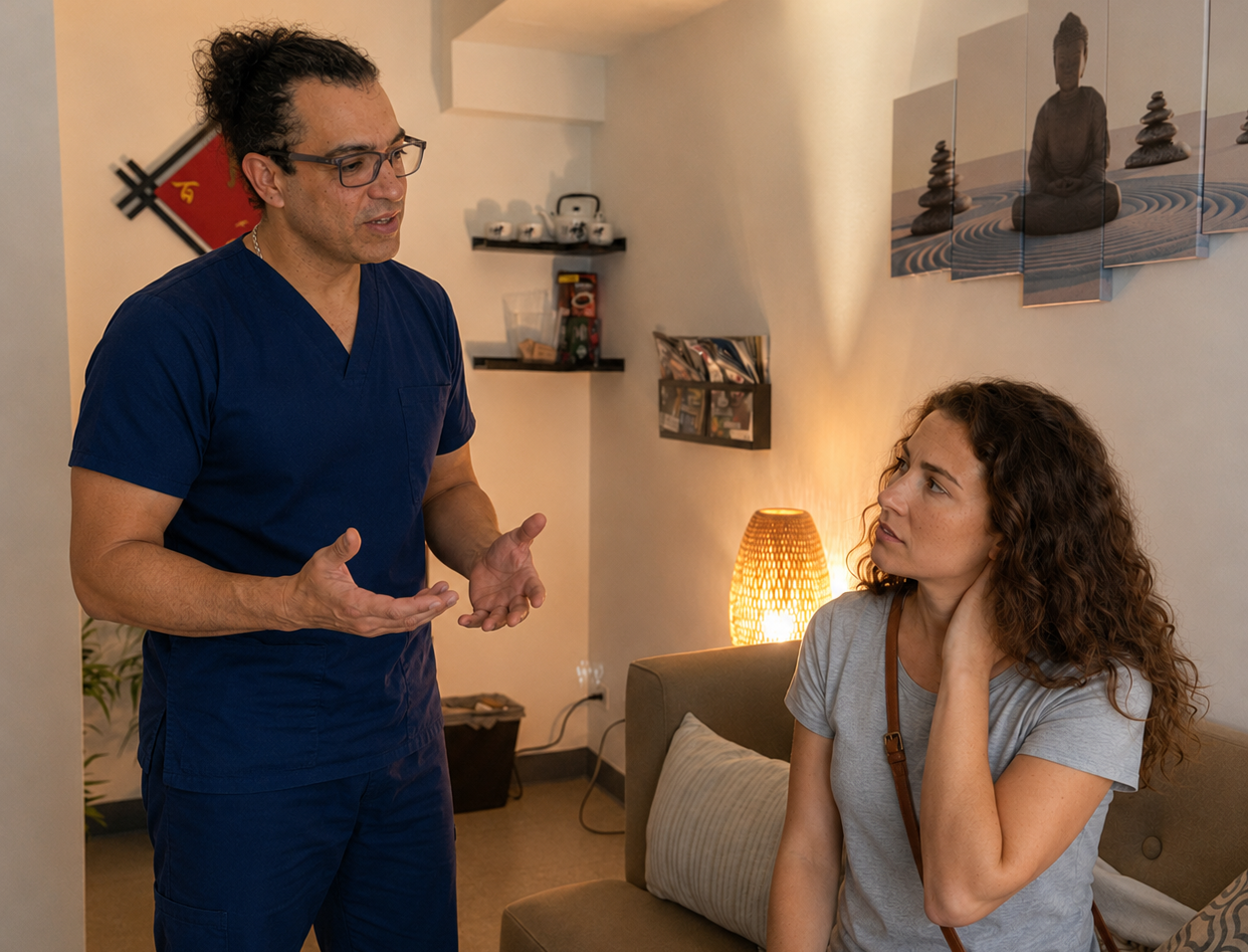
“I feel like I’m falling apart.”
I hear some version of this in the clinic when people have been managing several symptoms and can’t understand why so many things feel off.
Maybe the headaches have become more frequent. Your neck and shoulders feel tight, even when you haven’t done anything physically demanding. You’re more irritable than usual. And when you finally have a chance to sleep, you struggle to settle down or wake up feeling unrested.
Each symptom takes something out of you. Together, they can leave you wondering what happened to the person who used to handle everything.
You might start organizing your day around them: getting through work with a headache, trying to loosen your shoulders between appointments, apologizing for being short with someone, then hoping tonight will be a better night.
At first glance, these symptoms can seem to belong to completely different categories — pain, muscle tension, mood, and sleep.
But they may not be four separate problems.
After more than 22 years practicing acupuncture and Traditional Chinese Medicine, one of the most useful things I do is step back and look at how those experiences fit together.
Looking for the pattern connecting your symptoms
When I see a patient dealing with headaches, neck tension, irritability, and poor sleep, I’m not looking at four separate problems. I’m looking for the one pattern that may be connecting them.
That changes the conversation.
Someone might schedule an appointment because their headaches are interfering with work. As we talk, they mention that their shoulders never seem to relax. Then they describe feeling easily frustrated and lying awake even though they’re exhausted.
Those details matter.
I want to understand when the symptoms started, what was happening in their life, and whether the symptoms tend to intensify together. Did their sleep change during the same period their headaches became more frequent? Does the tension increase when they feel emotionally overwhelmed? What happens to their energy and digestion during those stretches?
In Chinese medicine, these relationships help us identify a pattern: a recognizable combination of symptoms and signs that guides our understanding of the person’s condition.
The goal is to make sense of the experience as a whole, while still paying attention to each individual concern. Finding a connection also requires recognizing when a symptom needs its own medical evaluation.
One example: Liver Qi Stagnation
One Chinese medicine pattern that can help explain this combination is Liver Qi Stagnation.
The name sounds more complicated than the basic idea.
In Traditional Chinese Medicine, Qi refers to vital energy and the activity that supports the body’s functions. The Liver system is traditionally associated with keeping that movement flowing smoothly.
Within this framework, Liver Qi Stagnation describes a restriction in that flow, often due to prolonged stress, unresolved emotions, or demanding life circumstances.
The word “Liver” here refers to a Chinese medicine functional system. It does not, by itself, mean you have liver disease.
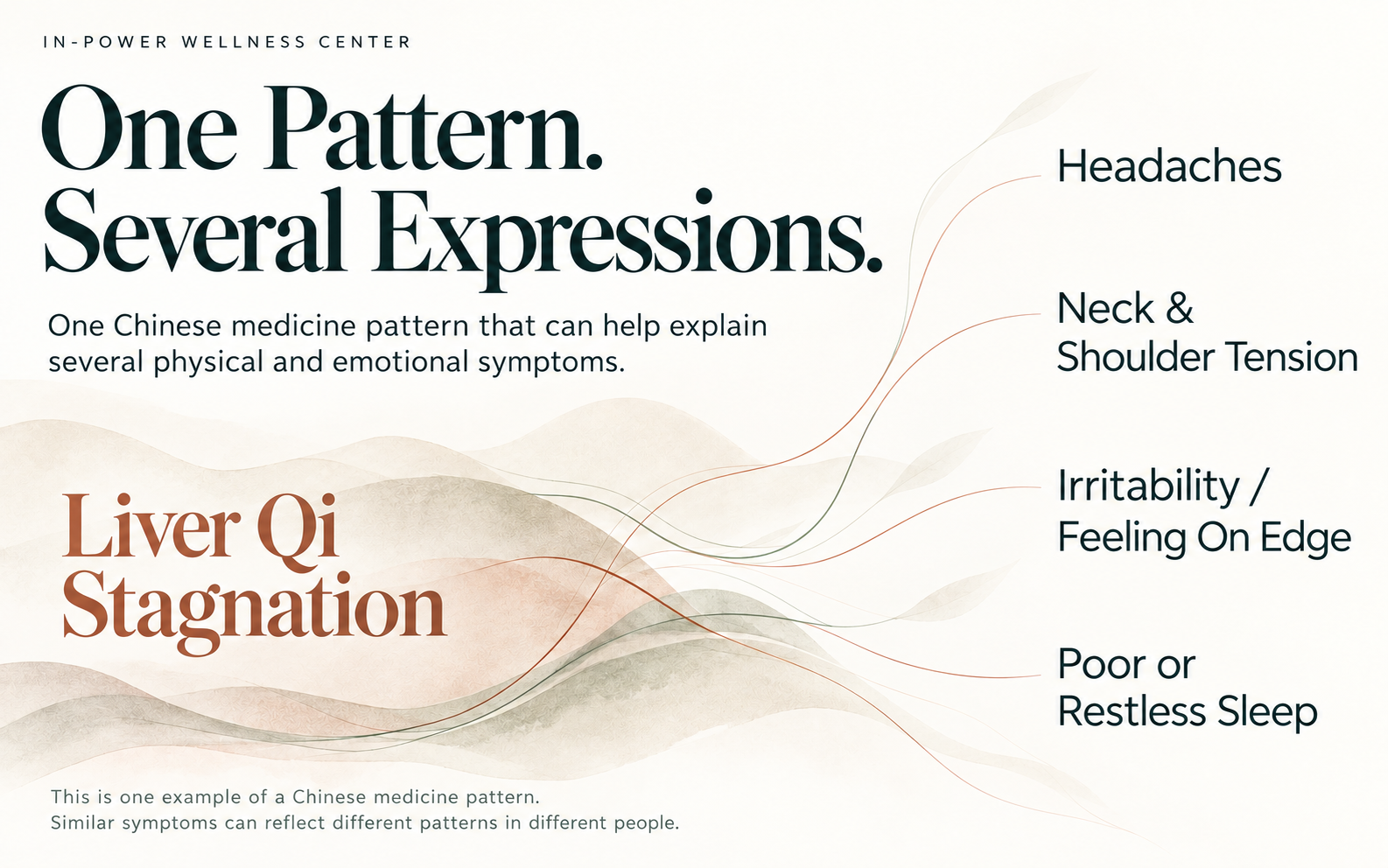
Think about a period when you’ve been carrying more than you can comfortably process. You’re meeting responsibilities, managing other people’s needs, and pushing through your own frustration. Even when the day ends, you don’t quite feel able to let go.
In the Chinese medicine framework, that experience can be reflected physically as tension, emotionally as irritability, and in difficulty settling into restful sleep. Headaches may be another part of the presentation.
When you step back and see the pattern, they start to make sense as different expressions of the same underlying imbalance.
This symptom combination alone does not establish Liver Qi Stagnation. It gives me a direction to investigate through the rest of the evaluation. Two people with similar headaches can have different patterns and need different treatment approaches.
You don’t need to memorize the terminology. The useful idea is that physical discomfort, emotional changes, and sleep difficulties can belong in the same conversation.
Why treating each symptom separately can leave something unfinished
When symptoms are approached individually, each one can lead to a different treatment.
Headaches may lead to pain medication. Persistent neck tension may lead to physical therapy or, in some circumstances, injections. Mood or sleep concerns may lead to additional care or prescriptions.
Those treatments can be appropriate and helpful.
It’s not that those individual treatments never help. It’s that when every symptom is treated as a separate problem, the underlying pattern that may be connecting them can be missed.
A person can experience relief in one area while still feeling that something remains unresolved. Their neck feels better, but they’re still restless at night. Their headache settles, but the familiar combination returns during another demanding stretch.
From a Chinese medicine perspective, one reason that cycle can continue is straightforward: because the pattern creating them is still there.
That explanation applies when the evaluation supports it. Recurring symptoms can have other causes, too, and understanding them takes more than recognizing a familiar cluster.
The point is to ask an additional question alongside “What will help this symptom?”:
“What is keeping this combination going?”
That’s the value of looking at the pattern, not only the individual symptoms.
What this approach looks like at In-Power Wellness Center
At In-Power Wellness Center, we begin with a comprehensive evaluation.
I want to hear what brought you in, what you’ve already tried, and what you most want to change. Then we explore the wider picture: your symptoms and health history, stress and emotional well-being, sleep, digestion, energy, and lifestyle.
We also look at relationships between concerns you may have assumed were unrelated.
For example, you might mention your headaches immediately but leave out your irritability because you think it’s simply a reaction to being busy. You may have accepted poor sleep as normal and stopped bringing it up.
Those experiences still deserve attention. They help me understand how you’re doing beyond the complaint that made you book the appointment.
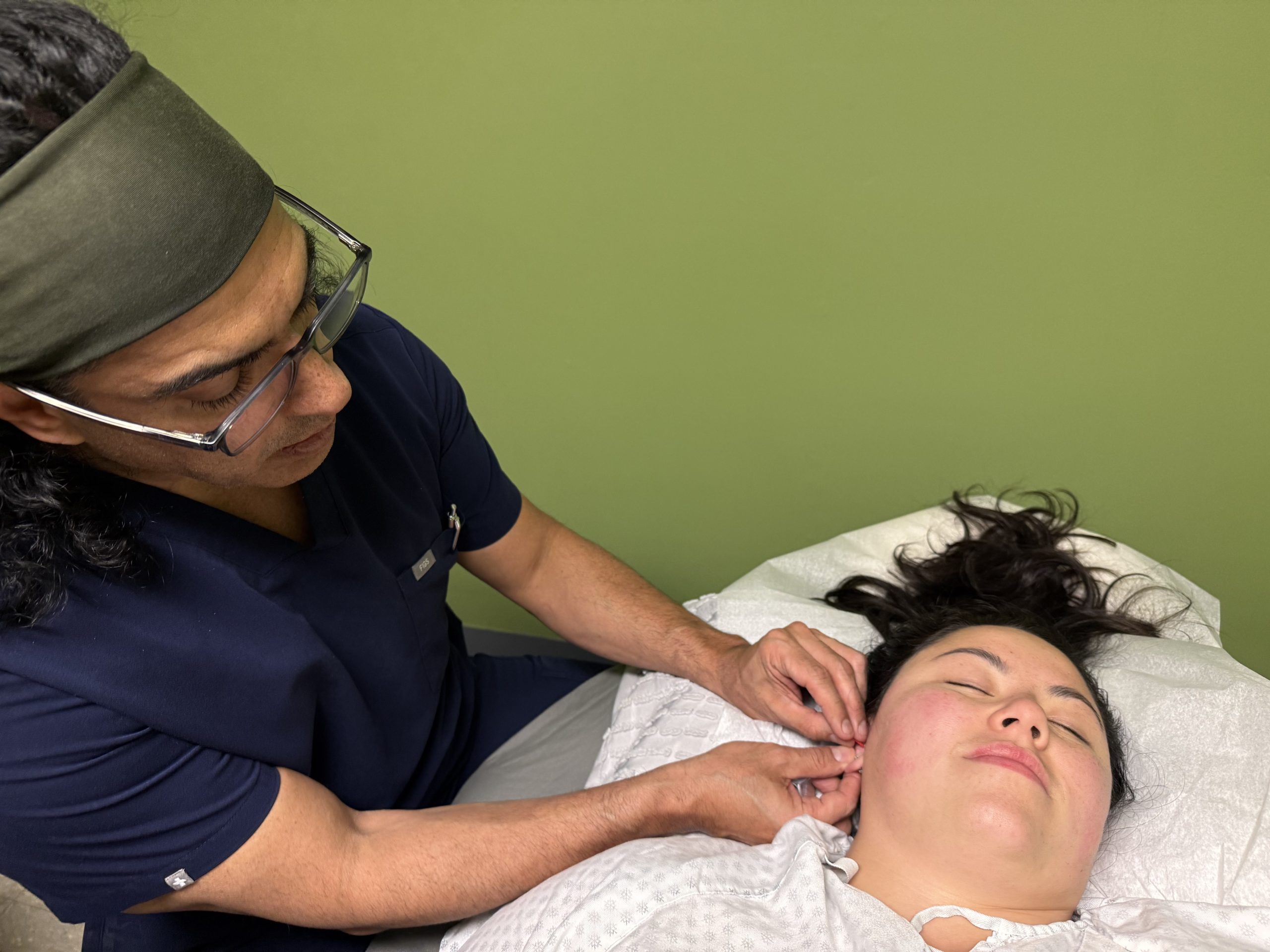
Once I identify the pattern, it guides the treatment plan. Depending on your evaluation, care may include acupuncture, electro-acupuncture, and other supportive therapies as clinically appropriate.
Within our Chinese medicine approach, the emphasis is on addressing the underlying imbalance as well as the symptoms that are affecting your life.
We also follow your progress across the concerns you brought in. Are the headaches less frequent? Does your neck feel less restricted? Are you settling more easily at night? Do you feel less on edge?
In my clinical experience, improvement sometimes becomes noticeable across several of these areas. The changes don’t always happen at the same pace, which is why we reassess rather than assuming the initial plan should stay the same.
I also explain what I’m seeing. Understanding your own patterns can help you recognize changes earlier and participate more actively in your care.
Start with a comprehensive evaluation
If you’ve been managing headaches, neck and shoulder tension, irritability, and poor sleep, you don’t have to arrive with an explanation already figured out.
Start with what you’ve noticed.
Tell me what has changed, what keeps coming back, and what you’ve begun to accept as your normal. We can look at those experiences together and determine whether a Chinese medicine pattern helps explain the relationships between them.
A comprehensive evaluation gives us the time and context to do that thoughtfully, and to discuss an appropriate path forward.
Sometimes the most useful question isn’t “How do we treat each symptom?” It’s “What might be connecting them?”
Feeling Off Lately?
IN-POWER WELLNESS CENTER
September 2026
Feeling Off Lately?
Your body may be adjusting to the seasonal shift.
Recognize What You Are Feeling
You are sleeping differently. Old tension is beginning to return. You feel more tired, congested, or irritable than usual.
Seasonal transitions are periods of adaptation. Your body may need time and a little more support.
Changes You May Notice
- Changes in sleep or energy
- Headaches or muscular tension
- Congestion or sensitivity to the weather
- Digestive irregularity
- Old symptoms beginning to return
A TCM Perspective on Fall
In Traditional Chinese Medicine, fall is associated with the Metal element and with the Lung and Large Intestine systems.
This perspective helps explain how breathing, elimination, daily routines, and environmental changes may relate to the body’s balance.
Lung
Breathing, skin, Defensive Qi, and adaptation to environmental changes.
Large Intestine
Elimination, regularity, and support for the body’s natural rhythm.
Adapting and Letting Go
Fall can be a time to notice which habits are no longer helping, create more space for rest, and adjust your daily routines.
Simple Ways to Support Yourself
1
Support Your Breathing
Walk, move gently, spend appropriate time outdoors, and keep a consistent sleep schedule.
2
Support Healthy Elimination
Prioritize hydration, regular movement, and fiber-rich whole foods.
3
Eat With the Season
Include nourishing seasonal options without turning them into a rigid diet.
- Garlic
- Ginger
- Radish
- Squash
- Apple
- Pear
How Acupuncture May Help
Treatment is personalized to your individual pattern and may focus on:
- Muscular tension and headache patterns
- Relaxation and nervous-system regulation
- Circulation of Qi and Blood
- Digestive regularity
- Balance between activity and recovery
A Good Time to Check In With Your Body
If familiar symptoms have started returning or you feel less balanced than usual, this may be a good time to give your body additional support.
Feeling More Tense Than Usual? What Your Body May Be Telling You
IN-POWER WELLNESS CENTER · PATIENT EDUCATION
Feeling More Tense Than Usual? What Your Body May Be Telling You
When stress starts showing up in your shoulders, jaw, headaches, or sleep, your body may be asking for a different kind of support.
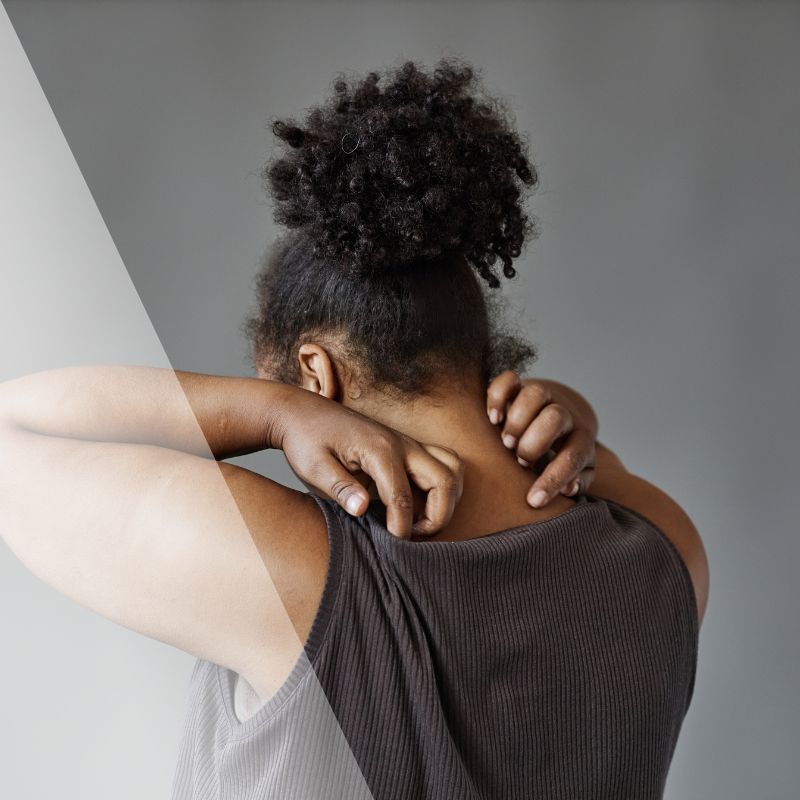
Maybe your shoulders feel tight before the day has even begun. Or a familiar headache is returning, tension is building around your shoulder blades, or your jaw is clenching without you realizing it.
When Stress Shows Up in the Body
Stress does not always feel like anxiety. Sometimes, it appears as a stiff neck, shallow breathing, or difficulty settling down at night.
Signs you might recognize
- Neck and shoulder tightness
- Upper-back or shoulder-blade discomfort
- Jaw tension or tension headaches
- Irritability or feeling overwhelmed
- Restless or disrupted sleep
A Different Perspective on Seasonal Tension
Traditional Chinese Medicine associates the warmer part of the year with the Fire element, including the Heart and Small Intestine systems.
This framework offers one way to understand why physical tension, mental overstimulation, and sleep changes can sometimes appear together.
Why Your Shoulders, Neck, and Jaw May Feel Connected
The Small Intestine channel passes through the arm, back of the shoulder, shoulder-blade region, upper back, neck, and parts of the jaw and face.
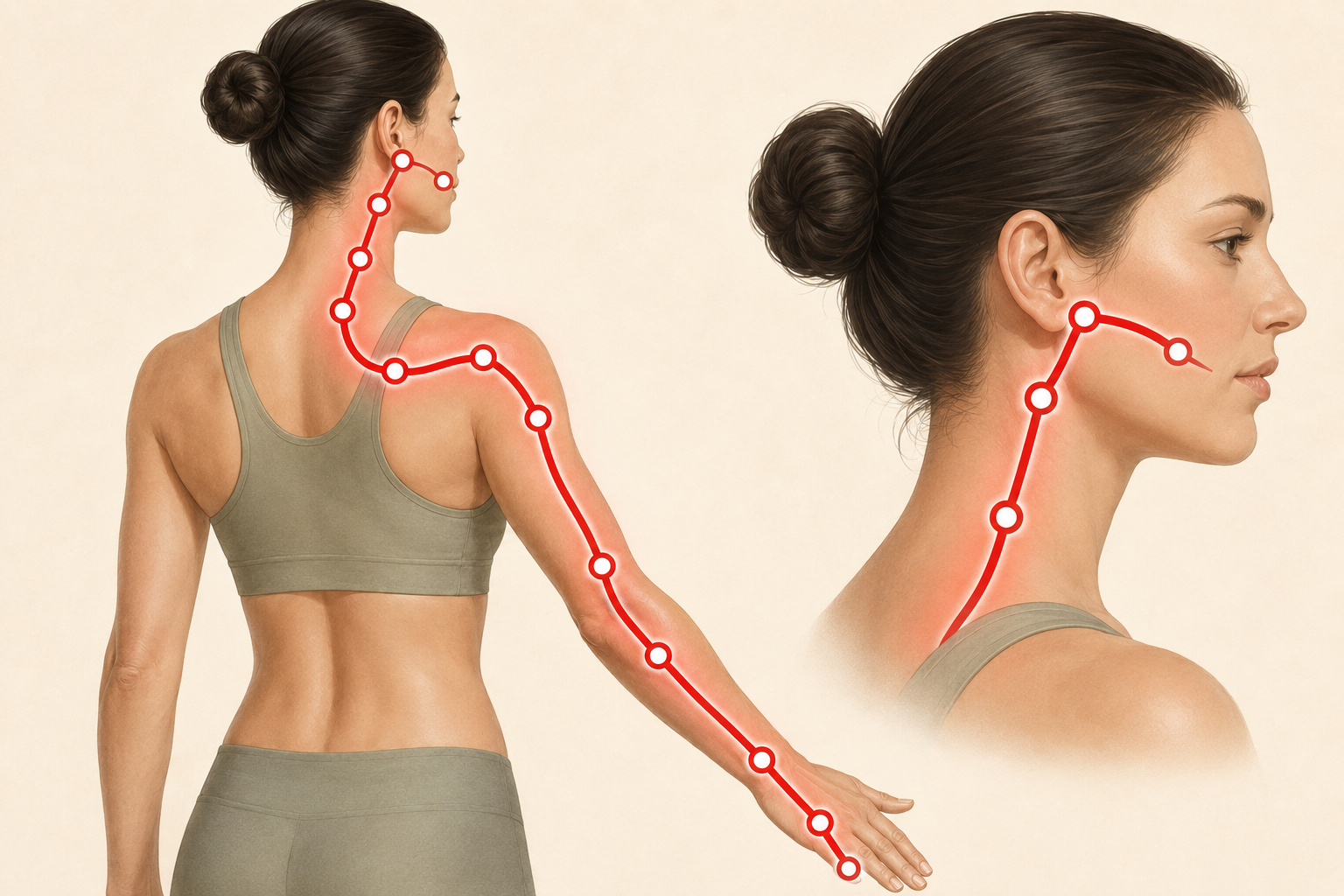
This does not mean every sore shoulder or tight jaw has the same cause. It offers a useful perspective on how several areas of discomfort may be related.
What the Heart Has to Do With Sleep
In TCM, the Heart is associated with the Shen, a concept related to awareness, emotional presence, and the mind’s ability to settle.
When life feels overstimulating, you may notice racing thoughts, irritability, or difficulty unwinding at bedtime.
Three Ways to Help Your Body Settle
Create a Few Minutes of Quiet
Try slow breathing, meditation, prayer, gentle stretching, or a few quiet minutes without your phone.
Reduce Evening Overstimulation
Notice how late caffeine, screens, alcohol, or heavy meals affect your ability to wind down.
Choose Nourishment
Support your body with regular meals, green vegetables, whole grains, hydration, and calming routines.
How Acupuncture Can Support the Bigger Picture
At In-Power, we look beyond one tight muscle to understand how stress, tension, headaches, and sleep may be affecting your overall well-being.
- Ease neck, shoulder, and jaw tension.
- Address stress-related headache patterns.
- Support relaxation and nervous-system regulation.
- Encourage a healthier rhythm of rest and recovery.
A Gentle Reminder to Check In
If tension, headaches, jaw tightness, or disrupted sleep have started returning, you do not have to wait until they become more disruptive.
Why Heat and Humidity Can Make Pain Worse
Seasonal Wellness · Pain & Inflammation
Why Heat and Humidity Can Make Pain Worse
Pain changes with the seasons—and the way we care for it may need to change too.
By Carlos Carpintero, L.Ac. · In-Power Wellness Center

The surprising pattern
Warm weather does not always mean less pain
Many people assume pain should improve when summer arrives. But after more than two decades of treating pain, I see almost as many people seeking relief in summer as I do in winter.
The difference is often not whether pain appears, but how it feels.
Weather does not affect everyone the same way. What matters is noticing how your own symptoms respond.
Winter pain vs. summer pain


These are common clinical patterns—not rigid rules or a diagnosis for every person.
From the treatment room
A patient whose low back pain returned during a heat wave
40%
reported reduction in pain intensity after two treatments
A longtime patient returned with low back pain that began during a period of very hot weather. At work, she moved between hot areas and other warm areas with strong fans blowing.
There was no visible redness, but the pain worsened with heat, improved with cold, and appeared to involve possible sciatic nerve irritation.
From a TCM perspective, I diagnosed Qi stagnation along the Gallbladder and Urinary Bladder channels.
Electrical stimulation
Electrical stimulation
Cupping
Herbal oil
Every patient responds differently, and no specific outcome can be promised.
Why diagnosis matters
The same pain location can have different root patterns
Two people may both arrive with low back pain, but one may have Cold and stiffness, another may have Dampness and heaviness, and someone else may show signs of Heat, inflammation, nerve irritation, or Qi stagnation.
Traditional Chinese Medicine looks at what makes the pain better or worse, whether it responds to heat or cold, whether it moves, and which channels and internal systems may be involved.
Five ways to care for summer pain
Walk early
Move before heat and humidity peak.
Keep moving
Use gentle walking and mobility.
Use contrast
Alternate comfortable warm and cool water.
Hydrate
Drink regularly in hot conditions.
Watch airflow
Avoid prolonged direct fan or AC exposure.
Common mistakes
What to avoid during a summer flare-up
- Applying heat automatically because it helped in winter
- Becoming completely inactive
- Letting fans or AC blow directly on the painful area
- Spending excessive time in extreme heat
- Becoming dehydrated
Seek urgent medical care for low back or sciatic symptoms with new bowel or bladder changes, saddle-area numbness, or progressive leg weakness.
Individualized support
How treatment may help
The goal is not to use the same formula for every person. Treatment is selected according to the quality of the pain, the channels involved, environmental influences, constitution, and underlying imbalances.
The plan should fit the person—not just the pain location.
Acupuncture
Electrical stimulation
Chinese herbs
Supplements
Topical products
Lifestyle Guidance
Cupping
Massage therapy
A seasonal approach
You do not have to simply endure summer pain
Your body is constantly responding to its environment. That is not a sign that your body has failed. It is a reminder that your needs may change as the seasons change.
At In-Power Wellness Center, the goal is not simply to chase a symptom. It is to help you understand your body more clearly and move through the seasons of life with greater comfort, resilience, and presence.
Ready to better understand your pain?
If heat and humidity are aggravating your back pain, joint pain, inflammation, or sciatic symptoms, schedule an individualized evaluation.

About Carlos Carpintero, L.Ac.
Carlos is a licensed acupuncturist and Traditional Chinese Medicine practitioner with 24 years of clinical experience helping people understand their bodies and move toward greater balance and resilience.
The Hidden Stress of Summer: Why More Sunshine Doesn’t Always Mean More Calm
Summer is often associated with relaxation, vacations, and more time spent enjoying life. The days are longer, the weather is warmer, and many of us look forward to spending more time with family and friends.
Yet every year around this time, I notice something interesting in the clinic.
Many patients begin experiencing increased anxiety, restless sleep, nervous system sensitivity, and even flare-ups of inflammation and pain. At first glance, this can seem confusing. After all, summer is supposed to be the season when we feel our best.
Summer isn’t stressful because you’re doing something wrong. It’s stressful because even positive changes require adaptation.
During the summer months, our routines often change significantly. Kids are home from school. Travel increases. Family gatherings become more frequent. Social calendars fill up. We stay up later and often indulge a little more than we normally would.
While these experiences can be joyful and meaningful, they still place additional demands on the body and nervous system.
The TCM Perspective: Summer, Fire, and the Shen
From a Traditional Chinese Medicine perspective, summer corresponds to the Fire Element. The Fire Element governs not only the physical Heart but also the Shen—the aspect of ourselves connected to awareness, emotional balance, sleep, and mental activity.
In modern life, many of us already live with a significant amount of mental stimulation. When summer adds more activity, less sleep, increased social obligations, and fewer opportunities for rest, the Fire Element can become imbalanced.
This may show up as:
- Increased anxiety or nervousness
- Restless or disrupted sleep
- Racing thoughts
- Feeling emotionally reactive
- Difficulty relaxing
- Feeling “wired but tired”
For some individuals, heat and humidity may also contribute to increased inflammation, joint discomfort, or aggravation of existing pain conditions.
The good news is that these patterns are often highly responsive to treatment and lifestyle adjustments.
Simple Ways to Support Your Nervous System This Summer
Spend time in nature.
Nature helps us slow down, reconnect with our bodies, and discharge excess mental activity.
Practice meditation near water.
Whether it’s a fountain, a creek, a lake, or even the sound of running water, water has a naturally calming effect on the nervous system and can help settle an overactive mind.
Reduce stimulants and alcohol.
Coffee, alcohol, and other stimulants can further aggravate an already overstimulated nervous system during the summer months.
Stay hydrated.
Proper hydration supports circulation, energy, and overall balance during warmer weather.
Schedule an acupuncture tune-up.
Sometimes the symptoms we experience are rooted in deeper imbalances that are not immediately obvious. Acupuncture helps identify and address the underlying patterns contributing to stress, sleep disruption, anxiety, and inflammation.
Herbal Support: Calm Shen
One of the formulas we frequently recommend during the summer months is our Calm Shen herbal blend.
In Traditional Chinese Medicine, the Shen refers to the aspect of ourselves connected to emotional balance, mental clarity, awareness, and restful sleep. When the Shen becomes unsettled, people may experience anxiety, frustration, restless sleep, racing thoughts, or a feeling of being emotionally overwhelmed.
Calm Shen was designed to help balance the Fire Element by nourishing Heart Yin, Blood, and Qi while gently soothing Liver Qi.
Many patients report feeling more centered, sleeping more deeply, and finding it easier to move through life’s challenges without becoming overwhelmed by them.
Rather than suppressing emotions, the formula helps create the internal balance needed to process experiences more naturally and respond to stress with greater resilience and ease.
Summer is meant to be enjoyed.
By supporting your nervous system, honoring your need for rest, and staying connected to your body’s signals, you can experience the vitality and joy of the season while remaining grounded, balanced, and present.