

- One Community
Acupuncture Center342 S Main St.
Unit 1 Lower Level
Bartlett, Illinois 60103(630) 837-4241 Follow Us!


- Sign up to receive news and updates and get my free report:“The Top 10 Reasons to Try Acupuncture”


Uncategorized
Acupoints For Fall
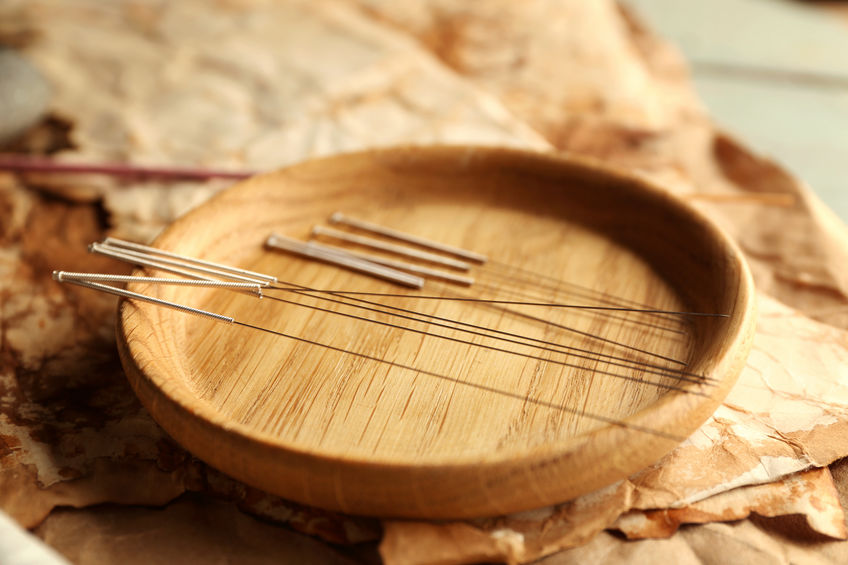
Because the lungs are one of the organ systems correlated with fall in traditional Chinese medicine, lung acupuncture points can be beneficial at this time of year. In this article we’ll look at two common lung acupoints and what they’re good for.
Lung 7
In classical texts, this point is revered as one of the four most important and useful points on the body. Lung 7 is also called Broken Sequence. This may sound like an unusual name for an acupuncture point, but it is in reference to the pathway of the lung channel where it splits to join the large intestine channel. Traditionally, Qi is transferred from one channel to another at the last point on the channel, but in the case of the lung channel, lung 7, not lung 11, is where the Qi is transferred, hence the break in the sequence.
Lung 7 is the main point for moving and regulating the Qi in the lung meridian. It can be useful for treating coughs, asthma, chest tightness and pain, shortness of breath and wheezing. It can also be used to treat chronic sore throats. This point can also relax the diaphragm and can help with chronic hiccups. For allergy sufferers, this point can be effective in treating common hay fever symptoms.
Lung 7 is also the command point for the head and the back of the neck. That means this point can be used to treat myriad conditions related to the head and neck. Lung 7 can release pain and stiffness in the neck, ease dull headaches, help with anxiety and help someone think more clearly.
Lung 3
Lung 3 is classically named Tian Fu. Tian can be translated to mean celestial or of the heavens. Fu can be translated here to mean storehouse or treasury. The most common translation for Lung 3 is celestial storehouse. The point itself is below the axillary fold on the radial side of the biceps brachii tendon. This is about three inches below the armpit and five inches above the elbow.
Lung 3 is classified as a window of the sky point, and has the function of regulating the flow of Qi between the body and the head. This point can also disperse stuck Qi in the chest for people who experience a shortness of breath, especially due to smoke inhalation or carbon monoxide poisoning. Needling Lung 3 will help them take deeper breaths and get more oxygen into their bodies.
One of the most common uses of Lung 3 is for spiritual issues of a wide range of manifestations. It can effectively treat insomnia as well as help people who sleep too much. This point is also used to treat confusion, poor memory, crying, depression and fear of ghosts. Traditionally, it was used to treat patients with tuberculosis. When the tuberculosis became severe and there was chronic depletion of the lung yin, patients would experience “floating corpse ghost talk,” basically delirious speech, which is where the treatment of fear of ghosts comes from.
Each acupuncture point is connected to many other areas and systems within the body, allowing it to be beneficial for a wide range of issues. Ask me today if you have questions on these or other points.
Potent Organs in Fall
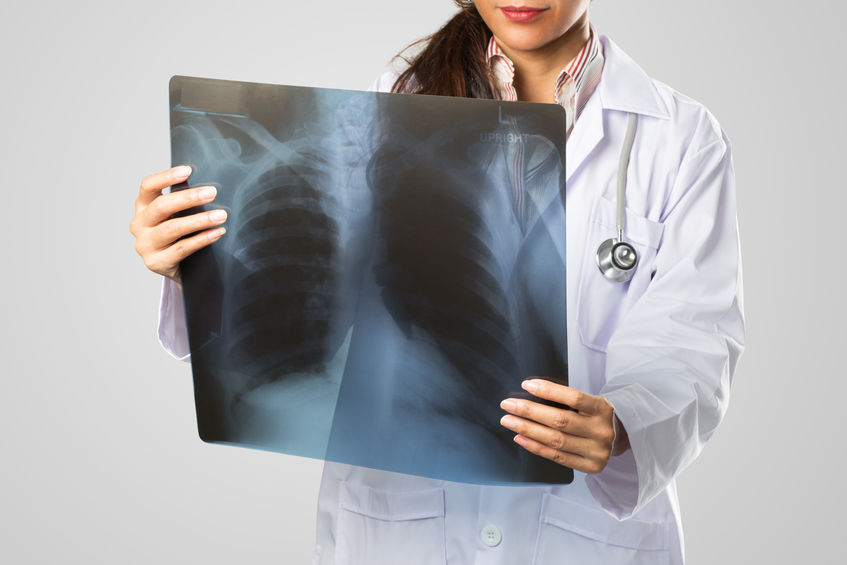
In Traditional Chinese Medicine, fall is the season associated with the lung and large intestine energetic meridians. These two meridians work in a symbiotic way to control the immune system from both the inside and outside of your body.
The large intestine channel runs up the arms, across the shoulders, up the neck, over the face and ends next to the nose. As many people now know, the health of our large intestine and gastrointestinal tract overall plays a big part in our immunity. Keeping the large intestine channel warm and preventing exposure from the elements will help to keep you healthy. Cold pathogens can enter the body through the pores or nasal cavity. By wrapping the neck and shoulders with a scarf during the fall months, you can help ward off the pathogens and prevent catching a cold or the flu.
The large intestine also has the function of transporting all waste products out of the body or to other areas for excretion. The large intestine absorbs liquid and releases anything that is no longer needed. This can be food, toxins or even emotions. This helps to cleanse the body and mind.
The lungs are the paired organ system to the large intestine in TCM. The lungs have a very special kind of energy, or qi, called the Wei Qi (pronounced “way chee”). Wei Qi is similar to what Western medicine calls the immune system. Wei Qi provides a barrier that protects the body from pathogens. When the Wei Qi is depleted or low, then the body is unable to fight off infections. Strong, healthy lungs enhance the functions of the whole body. Lung health can be weakened by poor food choices, pollution, poor genetics, emotional stress, and even unexpressed emotions such as grief or sadness.
The lungs are known as the Prime Minister in TCM. They control breath and energy, while assisting the heart with the circulation of blood throughout the body. The lungs also control the skin, which breathes through the opening and closing of the pores, helping to regulate body temperature. The pores regulate body temperature both through perspiration and shivering. This mechanism is another way the lungs help to protect the body – when we perspire, we usually release toxins from the body. Fewer toxins means less chance of getting sick.
As fall approaches, it is a good idea to start focusing on the health of your lungs and large intestine. One way to do this is by getting regular acupuncture treatments. Check in with us if you’d like to schedule extra appointments this fall to support your lungs and large intestine!
Research Update: Acupuncture and Respiratory Issues

The Journal of Complementary Medicine Research conducted a study that compiled the research from multiple trials to evaluate the effects of acupoint application for asthma in adults. Eight separate studies were included in the review. The results indicated acupoint application decreased the production of immunoglobulin E and increased the amount of air people could exhale in a single breath – a common way to diagnose asthma, because lung congestion reduces one’s exhalation capacity. The review concluded acupoint application, whether it be acupressure or acupuncture, helps improve pulmonary function, while reducing the levels of immunoglobulin E and interleukins in the blood.
Respiratory issues and deaths associated with them have shot up tremendously over the past 35 years in the United States. The number of deaths from chronic respiratory illnesses jumped from 41 in 100,000 in 1980 to 53 in 100,000 by 2014. Chronic obstructive pulmonary disease or COPD is the leading cause of respiratory deaths, but other ailments like asthma, interstitial lung disease and pneumoconiosis are also contributors. In many cases, symptoms are merely masked or managed through the use of pharmaceuticals. But, alternatives like Traditional Chinese Medicine (TCM) can address both the symptoms and the root causes of the disease.
Traditional Chinese Medicine considers how the psyche affects the physical body, making emotional wellness just as important as physical health.
In TCM, every organ is associated with a series of properties. These associations provide clues that help the TCM practitioner locate the root of the physical problems, while guiding them through the treatments. The lungs are associated with grief and sadness, the season of fall, the color white and the pungent flavor. The energy of the lungs is very important to all aspects of human life. When the body’s energy is imbalanced, disease or illness my take root.
The lungs are known as the “Prime Minister” in TCM. They control breath and energy, while assisting the heart with the circulation of blood throughout the body. The lungs also control the skin, which breathes through the opening and closing of the pores, helping to regulate body temperature both through perspiration and shivering.
Acupuncture can be a great asset in balancing the energy of the lungs. The function of the lungs is to descend and dispense energy downwards and to dissipate it outwards. When acupuncture points are stimulated the flow of your lung energy can greatly improve, while opening up the airways and increasing the uptake of oxygen within the cells of the whole body. Acupuncture also helps relax the muscles associated with breathing, allowing lung energy to flow properly.
Research Update: New Research Might Help Explain How Acupuncture Works
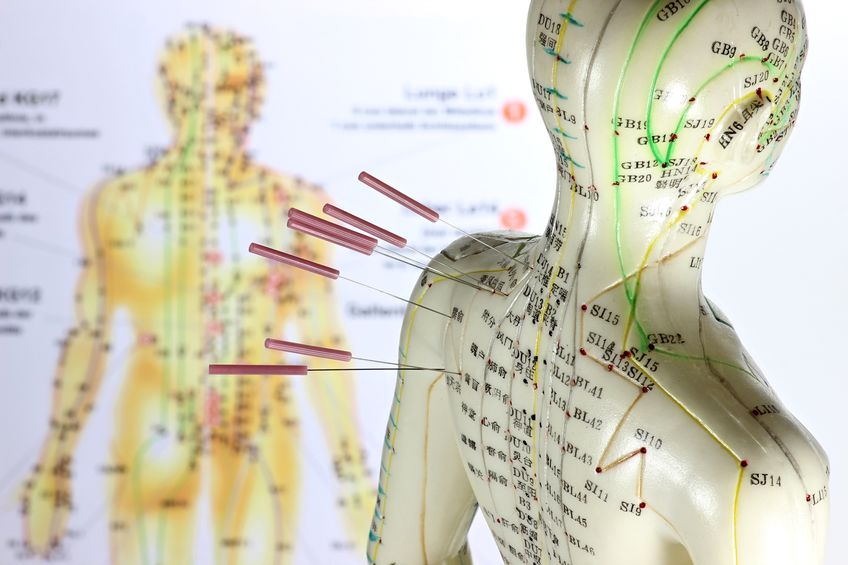
One of the theories scientists have held for many years as to why acupuncture works to alleviate chronic pain and other ailments is called the Vascular-Interstitial Theory. This theory describes the idea that acupuncture works by affecting the electrical system of the body, the network of currents conducted by our cells. Electricity is vital for sending information through the body to the brain and vice versa, as well as in order to conduct currents to the heart, which allows it to pump at the right times.
A disruption to any of these electrical currents can cause illness. The Vascular-Interstitial Theory of acupuncture suggests stimulating acupoints affects these electrical currents in our bodies, facilitating healing by allowing the transfer of blood, organic matter and electrical energy between healthy and injured tissues.
Research published in March 2018 in Scientific Reports offered a significant contribution to our understanding of the interstitium, and therefore sheds new light on the Vascular-Interstitial Theory.
Previous research on the interstitium suggested it was a layer of densely packed connective tissue lining the digestive tract, lungs, urinary systems and surrounding veins and fascia between the muscles. New and increasingly powerful microscopes now allow scientists to look inside living tissues. In this case, the authors of the research were able to look inside the interstitium for the first time, and rather than a web of densely packed connective tissue, they found the space is a network of interconnected, fluid-filled compartments. This finding may help to explain why placing acupuncture needles at specific points on the body creates healing elsewhere in the body.
In an article for The Cut, reporter Katie Heaney interviewed one of the authors of this new research, Neil Theise, a clinician and professor of pathology at NYU Langone Health and a proponent of alternative medicine. While the research paper itself did not discuss acupuncture, Heaney asked Theise to weigh in on the possible connections. Theise posited it was possible the research had implications for understanding acupuncture. The layer of skin into which acupuncture needles are inserted is the interstitium, Theise explained.
“There’s fluid in there,” he told Heaney. “When you put the needle [into an accu-point], maybe the collagen bundles are arranged into a channel through which fluid can flow.”
The research shows the interstitium is a structured and organized system in the body. It may be that stimulating true acupoints allows interstitial fluid to travel throughout the body, explaining why acupuncture has far-reaching effects, not just offering pain relief at the site where the needles are inserted. Channels of interstitial fluid may be responsible for facilitating the transfer of blood, organic matter and electricity between healthy and injured parts of the body. These findings also offer a possible explanation as to why other research has shown sham acupuncture points have some pain-relieving effects where the needles are inserted, but true acupoints go a lot further in offering system-wide relief.
As always, this research is inconclusive on its own. It will require more research to further explore the connection between the interstitium and acupuncture, but it is undoubtedly an interesting idea.
https://www.thecut.com/2018/03/do–we–finally–understand–how–acupuncture–works.html
https://www.nature.com/articles/s41598-018-23062-6
https://www.graduate.umaryland.edu/gsa/gazette/February-2016/How–the–human–body–uses–electricity/
Healthy Foods for Fall
The season of fall brings cooler weather and shorter days. As with any season, the world adjusts accordingly. Plants begin to go dormant, animals begin scrounging for food to store to get them through the upcoming winter months and humans start winterizing everything.
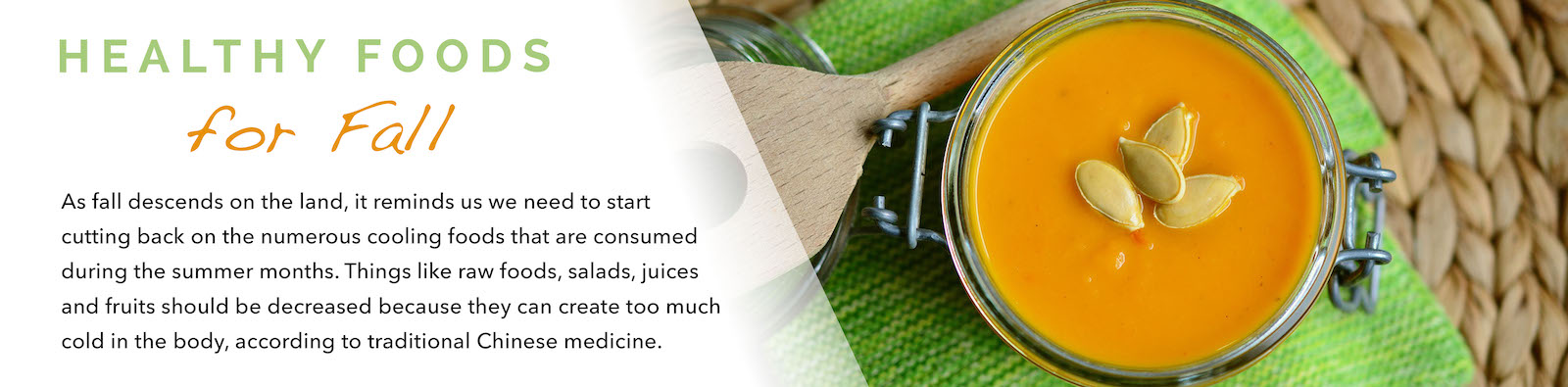
As fall descends on the land, it reminds us we need to start cutting back on the numerous cooling foods that are consumed during the summer months. Things like raw foods, salads, juices and fruits should be decreased because they can create too much cold in the body, according to traditional Chinese medicine. continue reading »