

By Carlos Carpintero, L.Ac. | In-Power Wellness Center

“I feel like I’m falling apart.”
I hear some version of this in the clinic when people have been managing several symptoms and can’t understand why so many things feel off.
Maybe the headaches have become more frequent. Your neck and shoulders feel tight, even when you haven’t done anything physically demanding. You’re more irritable than usual. And when you finally have a chance to sleep, you struggle to settle down or wake up feeling unrested.
Each symptom takes something out of you. Together, they can leave you wondering what happened to the person who used to handle everything.
You might start organizing your day around them: getting through work with a headache, trying to loosen your shoulders between appointments, apologizing for being short with someone, then hoping tonight will be a better night.
At first glance, these symptoms can seem to belong to completely different categories — pain, muscle tension, mood, and sleep.
But they may not be four separate problems.
After more than 22 years practicing acupuncture and Traditional Chinese Medicine, one of the most useful things I do is step back and look at how those experiences fit together.
Looking for the pattern connecting your symptoms
When I see a patient dealing with headaches, neck tension, irritability, and poor sleep, I’m not looking at four separate problems. I’m looking for the one pattern that may be connecting them.
That changes the conversation.
Someone might schedule an appointment because their headaches are interfering with work. As we talk, they mention that their shoulders never seem to relax. Then they describe feeling easily frustrated and lying awake even though they’re exhausted.
Those details matter.
I want to understand when the symptoms started, what was happening in their life, and whether the symptoms tend to intensify together. Did their sleep change during the same period their headaches became more frequent? Does the tension increase when they feel emotionally overwhelmed? What happens to their energy and digestion during those stretches?
In Chinese medicine, these relationships help us identify a pattern: a recognizable combination of symptoms and signs that guides our understanding of the person’s condition.
The goal is to make sense of the experience as a whole, while still paying attention to each individual concern. Finding a connection also requires recognizing when a symptom needs its own medical evaluation.
One example: Liver Qi Stagnation
One Chinese medicine pattern that can help explain this combination is Liver Qi Stagnation.
The name sounds more complicated than the basic idea.
In Traditional Chinese Medicine, Qi refers to vital energy and the activity that supports the body’s functions. The Liver system is traditionally associated with keeping that movement flowing smoothly.
Within this framework, Liver Qi Stagnation describes a restriction in that flow, often due to prolonged stress, unresolved emotions, or demanding life circumstances.
The word “Liver” here refers to a Chinese medicine functional system. It does not, by itself, mean you have liver disease.
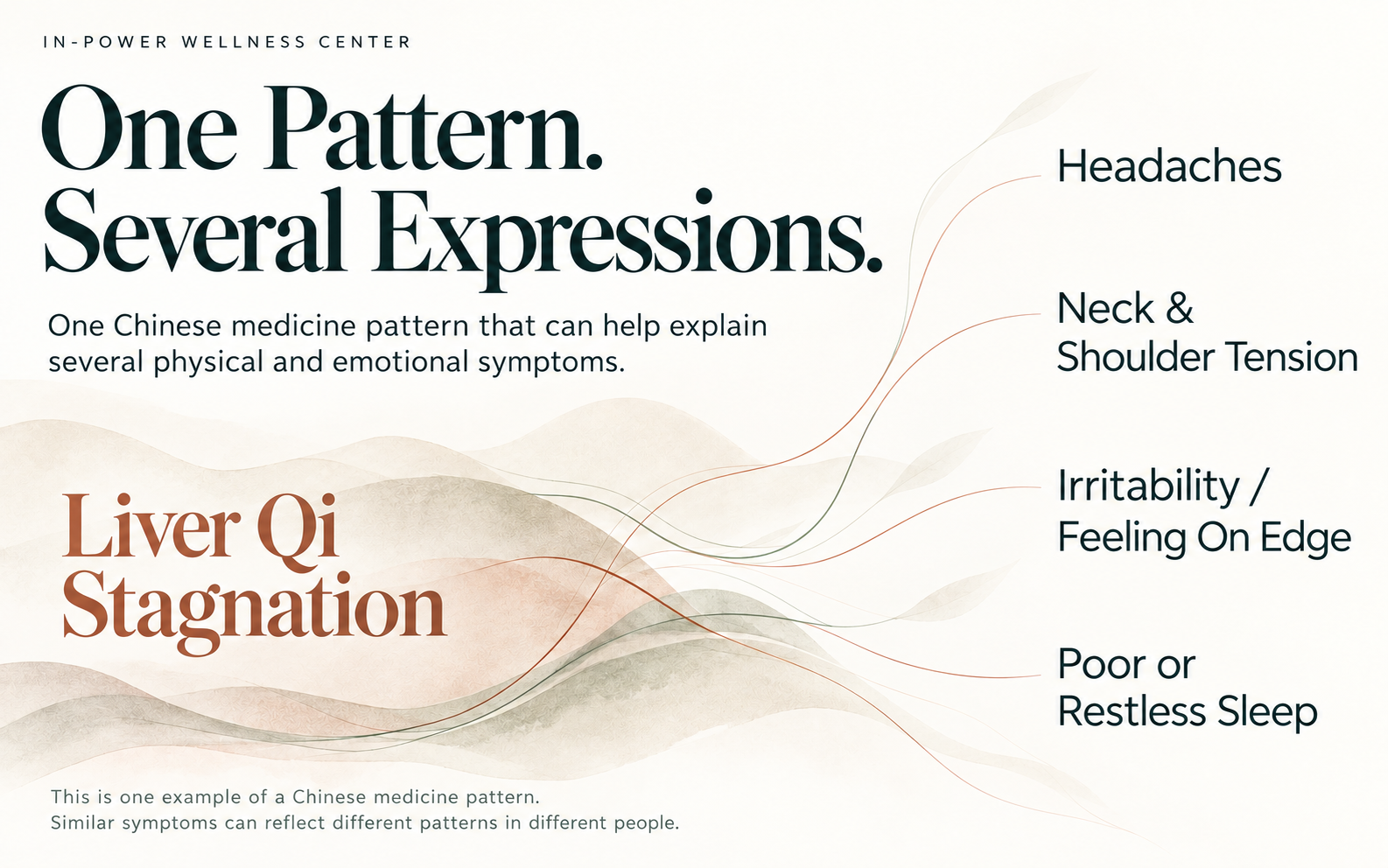
Think about a period when you’ve been carrying more than you can comfortably process. You’re meeting responsibilities, managing other people’s needs, and pushing through your own frustration. Even when the day ends, you don’t quite feel able to let go.
In the Chinese medicine framework, that experience can be reflected physically as tension, emotionally as irritability, and in difficulty settling into restful sleep. Headaches may be another part of the presentation.
When you step back and see the pattern, they start to make sense as different expressions of the same underlying imbalance.
This symptom combination alone does not establish Liver Qi Stagnation. It gives me a direction to investigate through the rest of the evaluation. Two people with similar headaches can have different patterns and need different treatment approaches.
You don’t need to memorize the terminology. The useful idea is that physical discomfort, emotional changes, and sleep difficulties can belong in the same conversation.
Why treating each symptom separately can leave something unfinished
When symptoms are approached individually, each one can lead to a different treatment.
Headaches may lead to pain medication. Persistent neck tension may lead to physical therapy or, in some circumstances, injections. Mood or sleep concerns may lead to additional care or prescriptions.
Those treatments can be appropriate and helpful.
It’s not that those individual treatments never help. It’s that when every symptom is treated as a separate problem, the underlying pattern that may be connecting them can be missed.
A person can experience relief in one area while still feeling that something remains unresolved. Their neck feels better, but they’re still restless at night. Their headache settles, but the familiar combination returns during another demanding stretch.
From a Chinese medicine perspective, one reason that cycle can continue is straightforward: because the pattern creating them is still there.
That explanation applies when the evaluation supports it. Recurring symptoms can have other causes, too, and understanding them takes more than recognizing a familiar cluster.
The point is to ask an additional question alongside “What will help this symptom?”:
“What is keeping this combination going?”
That’s the value of looking at the pattern, not only the individual symptoms.
What this approach looks like at In-Power Wellness Center
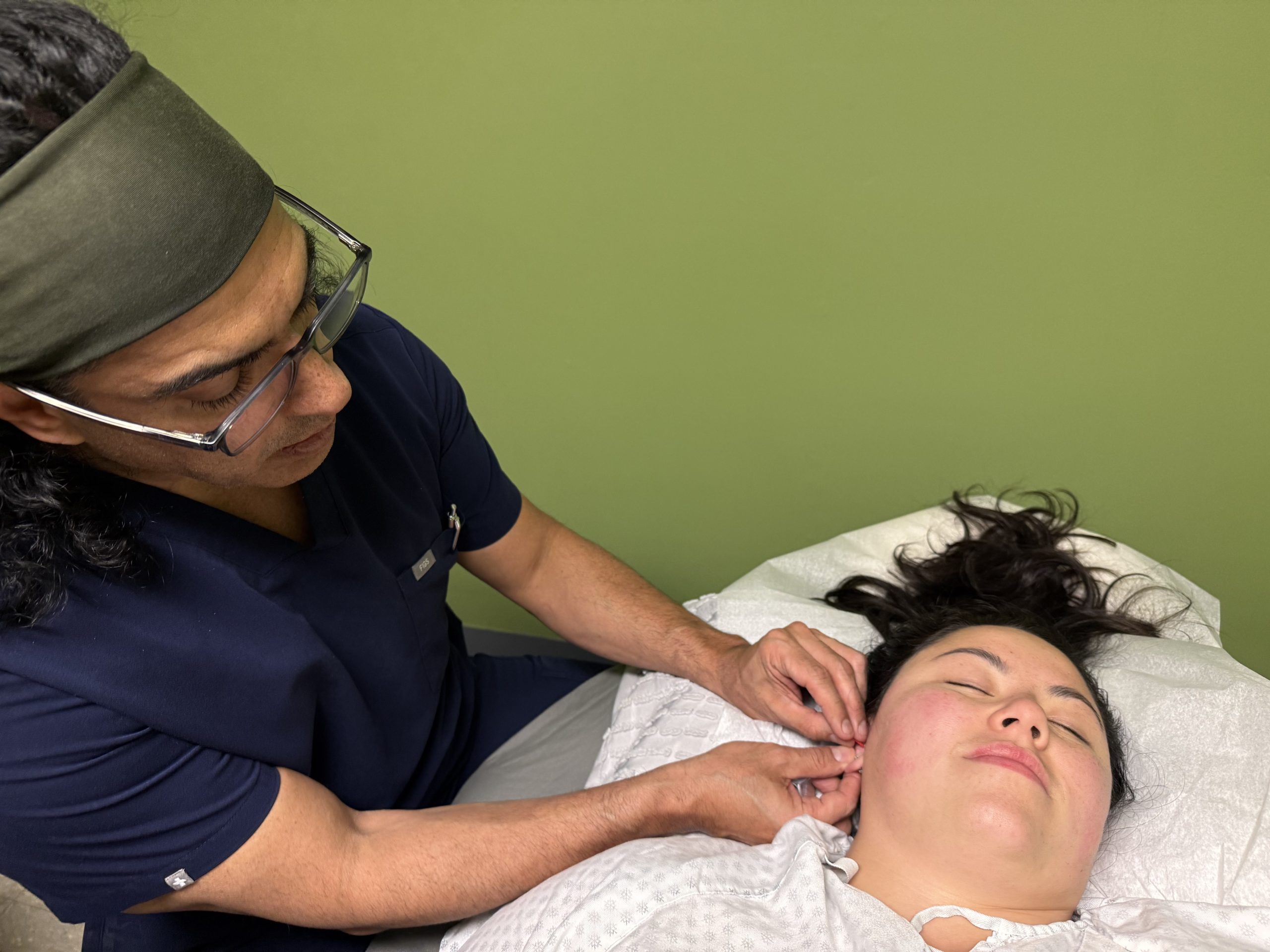
At In-Power Wellness Center, we begin with a comprehensive evaluation.
I want to hear what brought you in, what you’ve already tried, and what you most want to change. Then we explore the wider picture: your symptoms and health history, stress and emotional well-being, sleep, digestion, energy, and lifestyle.
We also look at relationships between concerns you may have assumed were unrelated.
For example, you might mention your headaches immediately but leave out your irritability because you think it’s simply a reaction to being busy. You may have accepted poor sleep as normal and stopped bringing it up.
Those experiences still deserve attention. They help me understand how you’re doing beyond the complaint that made you book the appointment.
Once I identify the pattern, it guides the treatment plan. Depending on your evaluation, care may include acupuncture, electro-acupuncture, and other supportive therapies as clinically appropriate.
Within our Chinese medicine approach, the emphasis is on addressing the underlying imbalance as well as the symptoms that are affecting your life.
We also follow your progress across the concerns you brought in. Are the headaches less frequent? Does your neck feel less restricted? Are you settling more easily at night? Do you feel less on edge?
In my clinical experience, improvement sometimes becomes noticeable across several of these areas. The changes don’t always happen at the same pace, which is why we reassess rather than assuming the initial plan should stay the same.
I also explain what I’m seeing. Understanding your own patterns can help you recognize changes earlier and participate more actively in your care.
Start with a comprehensive evaluation
If you’ve been managing headaches, neck and shoulder tension, irritability, and poor sleep, you don’t have to arrive with an explanation already figured out.
Start with what you’ve noticed.
Tell me what has changed, what keeps coming back, and what you’ve begun to accept as your normal. We can look at those experiences together and determine whether a Chinese medicine pattern helps explain the relationships between them.
A comprehensive evaluation gives us the time and context to do that thoughtfully, and to discuss an appropriate path forward.
Sometimes the most useful question isn’t “How do we treat each symptom?” It’s “What might be connecting them?”